Pages

Saturday, January 18, 2014


Compass North by Stephanie Joyce Cole

Compass North
Stephanie Joyce Cole
Romantic suspense
Champagne Books
ISBN: 978-1-77155-008-6
December 2013
Fleeing from a horrible marriage seemed the only possibility for Meredith Benton to be happy again. Taking a trip to Alaska is definitely a good plan until the bus she’s been travelling on with other passengers exploded right before her eyes. Formulating a plan, she moves in with an elderly lady in a small town and changes her name hoping it will be enough for her husband never to find her again. However, danger lurks just around the corner.
The plot of this book was captivating from the beginning and just kept getting better. The bomb on the bus rocks Meredith’s world and her resolve to finally find happiness for herself again. There were many twists and turns with first Meredith’s survival and then moving to a town where she knew no one and finding herself unwelcome by many of the folks in that small town. The sex scenes were mild and mostly memories of Meredith’s times with her husband when she’d held his attention. But between Meredith and the hero Nick there was certainly a strong attraction that could have been explosive if they’d come together. What I liked so much about Meredith was her determination to change her identity and find some peace in her life away from the misery her husband had put her through. While with Nick, I liked that he gave Meredith a chance, even knowing that she might be hiding a big secret from him.
Overall, this was an intriguing book of love and loss mixed with just the right elements of romance and suspense. Well done to this author.
Overall Rating: 4hearts
Sensuality Rating: Mildly Sensual
Reviewer: Bec

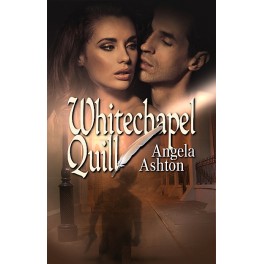
Whitechapel Quill by Angela Ashton

CHAPEL
Whitechapel Quill by Angela Ashton
Publisher: Champagne Books
Genre: Historical, Suspense/Mystery
Length: Full Length (206 pgs)
Heat Level: Spicy
Rating: 3.5 stars
Reviewed by Poinsettia
In 1888 London, an aspiring journalist will do almost anything to get a story on the front page of her father’s male dominated newspaper. Long grown tired of revamping redundant weekly missives regarding high-society fashion and gardening tips, Samantha Winston yearns for the day when she might prove it doesn’t take a pair of over-inflated bollocks to merit the coveted headline…even if it means going undercover to unearth the identity of the most sadistic killer to ever darken Whitechapel’s fog-laden alleys. Yet when Samantha intersects the path of Adam Hawkins, a meddlesome, fork-tongued, disarmingly attractive American seemingly hell-bent on ending the elusive killer’s reign of blood and terror, she finds herself no longer the huntress, but the hunted…
The killer is much closer to Samantha than she realizes.
Samantha is a very modern woman living in a place and time when women didn’t have the same rights as men. Samantha is extremely outspoken and brash at times, and she never misses an opportunity to voice her opinions on equal rights. Consequently, she is frequently at odds with her family. I completely understand Samantha’s outrage at the double standards of the day. However, I think that her arguments would be more effective if she varied her approach occasionally. Whenever the subject of women’s rights comes up, Samantha’s temper gets away from her and she ends in heated arguments. She does this so often that her family has taken to writing her tirades off as just another one of her fits. I must admit that her attitude even began to get on my nerves and I agreed with many of her ideas!
Even though Samantha’s attitude is somewhat abbrasive, I still think she is a likable character who is brave and dedicated to her writing. Since her father won’t give her the space in the paper that she deserves, Samantha feels she has no other choice than to go undercover and discover the identity of the killer stalking Whitechapel. Little does she know that the killer is practically right under her nose. I think Samantha’s plan to catch the murderer is a very foolish one. She has absolutely no experience with undercover work and even less experience in chasing murderers. As I read, I kept wondering what she would do if she actually did come across Jack the Ripper. However, I will admit that Samantha did the best she could with the resources she had, but it quickly becomes clear that Samantha is in way over her head.
Adam and Samantha have excellent chemistry from the moment they meet. Ms. Ashton paces their relationship perfectly. I enjoyed watching Samantha and Adam dance around their attraction for each other. It made the moment when they finally gave in to their feelings even sweeter. Samantha and Adam are both way to stubborn for their own good. However, I have a feeling that they’ll be an excellent couple.
I figured out who Jack the Ripper was fairly easily. In fact, as I read, I became increasingly frustrated when no one else seemed to be able to figure it out. Adam insisted on suspecting a certain character when there was absolutely no proof. There are plenty of hints concerning Jack the Ripper’s true identity, but Adam kept ignoring them until it was nearly too late. Adam is a smart man and really should have figured the mystery out much sooner. Despite my frustrations, I really like the way the story ended. Ms. Ashton found a clever and completely plausible way to explain the reason why Jack the Ripper’s identity remains a mystery.
Whitechapel Quill is a certainly a good read. I recommend it to anyone who enjoys dark mysteries, historical romance, and a heroine with attitude to spare.

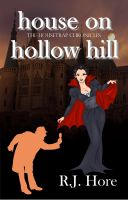
House on Hollow Hill by R. J. Hore

HORE
House on Hollow Hill by R. J. HoreThe Housetrap Chronicles, III
Publisher: Burst Books
Genre: Sci-Fi/Fantasy
Length: Short Story (108 Pages)
Rating: 4 Stars
Reviewed by Cyclamen
What could be simpler for a PI and his gal than attending a high-fashion weekend in the country to keep a close eye on the erratic host that someone wants dead?
Sounds like a simple assignment. Randy and Bertha go undercover for a high class weekend in the country, all expenses paid. All they have to do is pretend to be somebody else while keeping a close eye on their host, Archibald Anthony, the famous Serial Painter, and mingle with the other guests, exchanging pleasantries. Their job? To keep Anthony alive until the long weekend is over and sort through the suspects when the bodies start falling.
Of course the guests include some of the top rungs of the social ladder: vampires, elves, hobgoblins, goblins, trolls, gremlins, plus the addition of the varied staff members loose on the estate. Strangely enough, almost everyone seems to have their own private agenda.
Randolf C. Aloysius and his assistant, Bertha Wildwater, are hired for what is supposed to be a simple undercover assignment. They are hired to ensure that Archibald Anthony, the famous serial painter, stays alive throughout the weekend. The letter Randy receives giving him this assignment says, “You may be wondering why we have hired you. Artists of this stature are famous for being fickle and having enemies, and Anthony is a member of the Irrationist School of Modernistic Interpretation. They are feuding with at least two other groups, the Realistic Methodists for Landscapeture and Image Depiction, and the Anarchistic Academy of Delineation and Portraiture.”
And so the fun begins. This is an exciting, fast-paced novel with a bevy of suspects among the weekend guests as well as the varied staff members. Suspects are eliminated when they become victims, and Randy and Bertha have their work cut out for them. I liked both Randy and Bertha and found them to be very believable and real characters. Bertha, a half banshee, definitely knows how to handle herself and thanks to some night classes she also knows a bit of magic. But is it enough to keep ahead of the vampires, gremlins, and other assorted characters?
The setting is shown in humorous and complete detail. Randy and Bertha begin their adventures in Muddy Hogland Town which has “the atmosphere of a Venusian swamp.” It is descriptions such as this which add to the tone of the novel which reads like a crime detective story in the noir tradition. Mysteries abound and it is difficult to tell the villains from the merely greedy and grasping.
Many of the chapters open with a favorite saying from one of Randy’s relatives, and those are both humorous and revealing. Randy may think he is the detective, but he gets a lot of help from Bertha and the two work surprisingly well together. Fans of the fantasy detective story will certainly enjoy this fun and exciting mystery, filled with many quirky and unusual characters.

Monday, January 13, 2014


FROM THE DESK OF
DONA PENZA TATTLE, ESQ.
AND
ASSOCIATE WRYE BALDERDASH

Greetings,

Picking up from the New Year’s Eve party, Tattle sighs. 

“What’s up, post party blues?”  Wrye uses a rack to gather up the streamers.

Uses a brush and trashbin to clear away dishes and glasses “Just thinking about how fast the years go by.”

“Ahhh, the I’m-getting-old-and-life-is-slipping-away doldrums?”

“Naw, it’s the I-want-to-read-every-single-book the Champagne Book Groups puts outs pity-party.”

“Well, that is a very ambitious goal, m’literary bud, and I, too, long for the same thing.  So, let’s make it a goal and start with a Love of Literature Leap.”

Blues suddenly vanish as Tattle jumps up.  “Lets go!”


They appear in the first chapter Elizabeth Fountain’s spring 2013 release, YOU, JANE.

“Do you see that?” whispers Tattle.

“The comfy sofa?  I wouldn’t mind taking a nap.”  Wrye spreads out his invisible self on the couch.  “Ahhh!”

“No, silly-snoozer.  Jane Margaret Blake’s old papers.  The old box she just found in her closet.  A box she hid away many, many, many years ago.”

All of them have once upon a time written on them.”

Wrye finds a pillow and stuffs it behind his head, then holds up three fingers.  “That’s a lot of manys.”

“And a lot of years.  She always adored writing stories and each one started with those words.”

“Well, it is a great way to start a fairy tale.”  Wrye grabbed a blanket and tossed it over himself.

“She called them fables, and she wrote them as she were in a trance, sometimes they were long and sometimes short but they all had something in common.”

Wrye snapped his fingers and a steaming cup of hot chocolate appeared in his hand.  “And that is?”

Pacing, Tattle’s brow furrowed.  “They came true.”

One of Wrye’s bushy brows arched.  “What?”

Tattle paused, settled tensely on the arm of the couch.  “Not only that, the story’s reality caused her all sorts of problems in her life.”  Tattle pointed to the opposite end of the couch where Jane curled up with her box and her stories, sorting through a variety of cards and college news clippings and those stories on brittle, fading papers.  “She is getting lost in her past.”

Wrye settles into the cozy cushions, but suddenly comes alert.  “But what harm can that do?  All of us enjoy a little nostalgia.”

“Only, her nostalgia can come back to haunt her.”

Wrye pops up.  “Ut oh!”

“You said it, one very big ut oh!”

“Sooo, let’s stick around and see what happens.”  With a yawn, he cuddles back into the sofa.

“Oh no you don’t, we’re off another leap!”


“Now, to visit a back shelf book, DANGEROUS DESIRE by Romona Hilliger.  Tattle and Wrye quickly find themselves intruding on a spat between the lovely married Amy Anderson and her seven years younger art teacher who has a girlfriend.

"I smell trrrrouble!" announces Tattle as she scans the book's pages. "Her marriage is over except for in name, but her conscience is certainly pushing her away from this naughty attraction to a younger man.

"Jamie, the heart-tugger in question, doesn't think it's so naughty. He seems star-struck, and he is quite hurt by her rejection."

"Amy hurts just as much." Tattle flips through several pages. "She believes what she is doing is wrong, but she also can't resist. Mmmm, such delicious pull-n-tug. Her hesitating, then giving into coffee dates...him pursuing...her refusing...him chasing...her remembering her dissolving marriage and that love often equates to pain...he being so different...her falling..."

Wrye puts up a halting hand. "I get it. I get it. She feels she should have learned her lesson about love, but as we can see...," he points to several paragraphs, "she's having a tough time keeping barriers in place."

"As is Jamie. He lost his family and his first love. He feels affection for another, but nothing resembling passion." Tattle places a finger on her heart and makes a sizzling sound. "Amy, though, done-gone and brought the heat back to his heart. He wants to push her away but can't seem to find the will."

They watch Amy and Jamie struggle, each tossing out hurtful words as their spirits dissolve in despair. Tattle says softly, "Will they ever be able to find a path to each other?"

"Perhaps not," Wrye returns, "but love always has its possibilities. So, read and be part of the character's passionate journey."

Hope you enjoyed.  Have a great New Year and continue to read!


Dona Penza Rutabaga Tattle, Esq. and Associate Wrye Balderdash
of Blather City, Wannachat

 
Created and written by
Angelica Hart and Zi

Books by Angelica Hart and Zi
KILLER DOLLS ~ SNAKE DANCE ~
CHASING YESTERDAY ~ CHRISTMAS EVE...VIL

Wednesday, January 8, 2014

What Sells Books, by Allison Knight

Some define the art of writing as an art. It is that, but selling that writing is a business. It is as much a part of the author's responsibility as building a career. I consider my association with my publishers as a partnership, two (or more) working to bring my work to the forefront. If an author wants to turn the whole process over to an agent, so be it. I want more control.

Since I've had little energy and lots of time to sit in front of a computer and play around (writing takes work so that was limited for me as I grew used scheduling my time better), I did some research and lots of reading. I dissected my researched info into three categories: what sells, why it sells, and how to sell it. I didn't go into a lot of promotional ideas.

What I found were some interesting discoveries. First, what sells in romance. Well, chick lit is down, fantasy seems to be up, humor is making a come back, and it's a draw on the paranormal stuff. But the general trend is shorter work. I used to write epic tombs... 145K words. No way, Jose! What seems to sell well now is 45 - 60 K words. So maybe I'm writing too long.

Novellas are in and so are short stories, but the longer novels - not so much. It looks like there might be a resurgence in historicals, especially in the US and UK, although I see some really early stuff showing up. Ancient Roman, for example.

Discovering why it sells required reading lots of reviews. Those were fun, and do shed a bit of light on the why. Everyone likes a well written story. Therefore good editors are a must. A bad book gets panned. People seem to like tongue in cheek humor, not the slap-stick kind, and certain themes appear to be getting worn out. For example, the heroine's hidden pregnancy.

Reviews count a little but word of mouth seems to be the best example of why a book sells well - more than anything else - so people discussing the book on Facebook, etc. helps. (That is, talking about someone else's book, not your own.)

The how to sell it was a surprise. This one I had to turn to my DH and a couple of other readers for their answers and again a trip through those review. First, for some, that first book free from Amazon does work if - and this is a big, big if - that book is great! Several people bought a whole series because the first book was so good. My DH is one of those. He read a new author on his Kindle, liked what he read, searched for more and bought three more of the author's books. He's done this now a couple of times. Several people I mentioned this to agreed they had done the same. So, that free book had better be a real winner or you'll sell no more books, period.

Again the word of mouth came into play. Talking a book up on the social media (not your own, but someone else's book - and again it had better be good, or you'll look like a fool) is a great way to get those sales. Which gives room for a thought. Have you mentioned a book you've recently read that you really liked? Okay, I'm guilty too, but the more I think about it the more important that seems to be. So, from now on, when I read a really good book, I'm going to mention it. Maybe the author will return the favor.


Allison Knight is the author of several books, including Lynbrook's Lady, Windsong (a medieval romance) and, recently, Betrayed Bride (contemporary romance).
You can find out more about Allison at her website, http://www.allisonknight.com/

Wednesday, December 18, 2013

Visibility is Everything


I’ve always heard that the most important way to sell books is to write a great story. When it’s done, write another great story. And so on, and so forth. But there are other factors that affect book sales. Today, I’d like to talk about one of them: Visibility.

Recently, I browsed titles on the Champagne website, looking for something new to read, and went looking for more information on a few author’s websites. I was surprised when I couldn’t find websites for some authors. As well, on other sites, there were no links to buy the books.

So here’s my question: How visible are you? For a quick check, go out and google your author name.  How many of the hits on the first page are yours? My personal gauge, especially if the author name is unusual, is that 75-90% of the hits on that first page should be you. If they’re not, you’re not easy to find. And if I go searching for an author and don’t find a website link on the first page of hits, I don’t look further, to be quite honest.

Visibility is everything in this business. If you aren’t seen, you aren’t selling books. Social media is a good way to be visible, but it’s also easy to get lost in all the tweets and Facebook invites.

One of the best ways to make certain you are visible is to have a website. Do you have one? If so, I applaud you. Every author should have a professional looking website. Let me say that again. EVERY author should have one. And every website should have information about your stories and LINKS to the major markets where your books can be purchased. The first rule of marketing is to make it easy for the buyer to buy. So make certain you’ve made it as easy as possible for readers to find and buy your books.

A website is also a great way to put a stamp on your brand, as Graeme recently discussed on this blog. If you know your brand, showcase it here. Let the world know who you are. Your website should have a place for news (hopefully front and center), a short biography about you, a books page (with LINKS), and links to your social media and email. That’s a minimum. Beyond that, I say have fun. Devote a page to the world you’ve created for your stories, or to a hobby you love. Or to your dog or cat.

That being said, not everyone can afford a professionally designed website. It’s not cheap. But there are options. Wordpress.com, for instance. You can design a free website there, with multiple pages. You can do the same thing on Blogger. And I’m sure there are other free venues out there. You don’t have to be a website designer to do this, but you do need to have a vision (your brand).  And if you need ideas, google your genre of writing, like “author, science fiction.” Start looking at other websites to figure out what you like. 

I’m not going to go in depth into domain names here, but as an author, I do suggest you purchase your domain name as soon as possible and tie it to your website so people can find you. Here’s where I strongly suggest you chat with other authors or entrepreneurs to determine where they bought their domain names. And if you can’t get the name you want, play around with it a bit. Add something like “author” or “books” to the end of it. Graeme’s website is graemebrownart.com. That’s a great way to individualize it, and if I search for “Graeme Brown”, it shows up on the first page.

A website isn’t the only thing needed to be “visible” on the web, but it’s where every author needs to start. I’ll try to talk about more things you can do to increase your visibility in future blogs.


Laurie Temple is an editor at Champagne Books


Wednesday, December 11, 2013

Branding


Today I am going to talk about the "B" word.

B is for branding. In this industry, if you want to have a successful career as an author, it is very important you discover how to do it.

What is branding? Let's start with a few examples.

1. Myrtle Ball, the "Scribe of Bren"

You're going through a convention and you spot a table. On this table are all sorts of medieval books and statues of wizards, and the author of the books, Myrtle Ball, sits behind a glossy map of her world (cleverly mounted to the table). On the left are short stories about small significant events that occur in her world, on the right are novellas that explore larger events like quests, and the author tells you she's in the process of writing a novel about the Kingdom of Bren's first civil war. She tells you about her plans to write more, and how every story she writes opens up the doors to others (and adds more to her gigantic world map, which will soon be broken up into a detailed book of maps next year). Myrtle calls herself the "Scribe of Bren" and refers to each of her books as an act of unearthing more about this previously undiscovered realm.

I don't know about you, but I'd stop at this table and feel I have entered the unique world of the books. The products I see build one thing and offer you more to come. It's exciting. It comes to life. I think I'd buy one of Myrtle's Books.

This is branding.

2. Mary and Marvin McKay, science fiction near and far

You wander a little further down and find another table with two science fiction authors, Mary and Marvin McKay (husband and wife) whose series of space-war sagas line up along their table. The husband deals with the Colonizer series, set 1000 years after the Foundation series (which the wife writes). The wife's books, on her side of the table, are arranged in trios based on the various trilogies they belong to, while the husband is writing an open-ended series that relates to events that occurred before the Foundation series. Every time Mary (the wife) adds more to her series, she tells her husband and he gets ideas for his thousand-years-later line. They sound passionate and excited as they talk about how the saga has unfolded, and where they're going with it. "This is the future of our technology as we see it," Marvin says, while Mary adds, "We like to write about how our world changes over time, especially the people who are at the heart of it."

I don't know about you, but I'd stop and be quite intrigued. Suddenly, this isn't just about books they've written. It's about what those books are. Even though this husband-wife team write two separate series', they have branded themselves and made these books into a collective whole. The collections promise more and, most importantly, promise me, the reader, that if I start reading, I'm in for an adventure.

This is branding.

3. James Jenkins, a man of many mysteries

I reach the far end of the aisles and here is yet another author. James Jenkins writes stand-alone mystery novellas. None of them are the same and each of them borrow from different sub-genres. The Blood in the Alley is a thriller-suspense mystery, The Source of A Scream is a horror mystery, while Who Killed Mrs. Molly is a romantic-comedy mystery. It goes on and on—classic mystery, fantasy mystery, even erotic romance mystery—everywhere I look I have something different. I might think James is all over the place, except James has given me one important clue: all of his works involve mystery and a puzzle to be solved (he's made sure this is clear by picking a tablecloth with question marks in the fabric). James' opening line, as he smiles and watches me scan the shelves, is, "What kind of mystery is your favorite?"

James, too, has branded himself.


What do these three examples have in common? All three authors have embraced not just a book to promote themselves with. They have instead embraced a brand and are at their tables promoting that brand.

So how do you brand yourself? More importantly, how do you brand what you write?

STEP 1. Discover what you want to write, and stick to it

The first way to discover your brand is to discover what it is you really want to write. Maybe you write detective stories and horror stories. Maybe you hate both but really want to write romantic comedy. After all, your friends said you should be a comedian before you decided to become a writer. So, what are you waiting for?

Perhaps you write women's fiction and horror. You do well at both, but deep down you've always enjoyed giving people a scare. Maybe your mind races with ideas for terrifying stories and you have a box full of ideas waiting to be turned into stories, but you're working your way through it slowly because you're busy turning our those women's fiction manuscripts as well. Maybe you're selling those women's fiction manuscripts like hot cakes, but you hate the detour (in fact, you're even thinking of turning them into horror stories).

This is the point where you have to ask yourself how long you can keep it up. Or, a deeper question: money aside, are you satisfied as a writer?

Passion is a key ingredient to branding yourself. Why? Because you're going to put the core of your energy into this one product and you're going to bring it to life. If it's not something you feel passionate about, you're going to burn yourself out, and, worse, your readers are going to see behind the facade. Your brand might not be your current bestseller, but take a risk and put all your energy into doing what you love, and you might be pleasantly surprised at the results.

STEP 2. Find a common ingredient

Branding is difficult if your "one thing" isn't easy to categorize. Often, a writer's first instinct with branding is to take everything he or she writes and try to lump it all together (see STEP 1 above - sometimes branding means closing some doors so others can open).

Branding yourself takes thought and time, and is more of a process than an instant change. As a personal example, I write epic fantasy. I am also a digital artist and web designer and a musician. (I'll leave out the math student-editor-computer programmer bit.) My website used to be a grab-bag portfolio of everything I'm good at doing. However, in the process of branding myself and realizing that my true passion lies in the art of storytelling and its application to the epic tales I bring to life every day at the keyboard, I've started making radical refinements. The digital mandala art I make will soon become a representative art form from the early ages of my world. My background in web design has allowed me to conceptualize a website that will be a central hub of free material for fans—to essentially create an environment where the world of the epic lives and grows while I take my time to craft each successive tale. The music, the math, and the computer programming are part of my personal life, and thus do not belong on my website at all. Granted, I'm still no Myrtle Ball, but at least readers who come to my site see a brand in development, not a labyrinth that promises to confuse.

Whatever it is you do when you brand yourself, you want it to have the effect of feeling like, "ONE". One thing, one entity, and you, the author, represent that entity. It's not a log-line, nor a catch phrase that you recite, nor a way of organizing your books. Rather, it's a way of putting them all together based on what they have in common, and your job, when you brand yourself, is to discover that and make it real.

STEP 3. It's a work in progress

Branding is a work in progress. It's not easy. You won't necessarily get it right immediately.

Take the first example above of our "Scribe of Bren". Maybe she wrote a short story and didn't know what to do with it. Maybe she tried a horror and it flopped. Readers wanted another story, so she wrote another one. That was when she drew the map. Things took off from there. (And, of course, she's been at it for seven years now.)

Or take the husband-and-wife team. Maybe they originally wrote unrelated science fiction works but wanted to promote one another. Maybe story number three for hubby related to something in his wife's world, then she started setting up her trilogies to relate to his. One night after a brief argument (he was wrong, by the way), they decided to name their series' and stick to the rule that the two were related.

Finally, look at our mystery man James Jenkins. In the beginning, he wrote in all sorts of genres. His rule of thumb was to never write the same thing. He wanted to change, "Like a snake shedding its skin," as he put it in one of his early interviews. One day his editor rejected his horror-comedy because they had no idea if it would sell. His editor talked to him about branding and after about a month, our author presented a horror-comedy mystery novel, invented the pseudonym James Jenkins, and presented a business plan to write more of these genre-benders, all with mystery as their common thread.

The need for branding

In this market, where millions of books are turned out per year, readers are easily distracted. As an author, you need to present them a magnet stronger than the other ones around you. A book by an unknown author is not going to do it, no matter how catchy the cover is. Nor will several books turned out every few months grab their attention.

You need something stronger. You need a brand.

Whatever that brand is, make it your goal to discover it, the same way you discover the stories that bring it to life.


Graeme Brown is a junior editor with Champagne Books. To find out more about Graeme visit his website: http://www.graemebrownart.com